wayne state university campus-wide space analysis and master plan
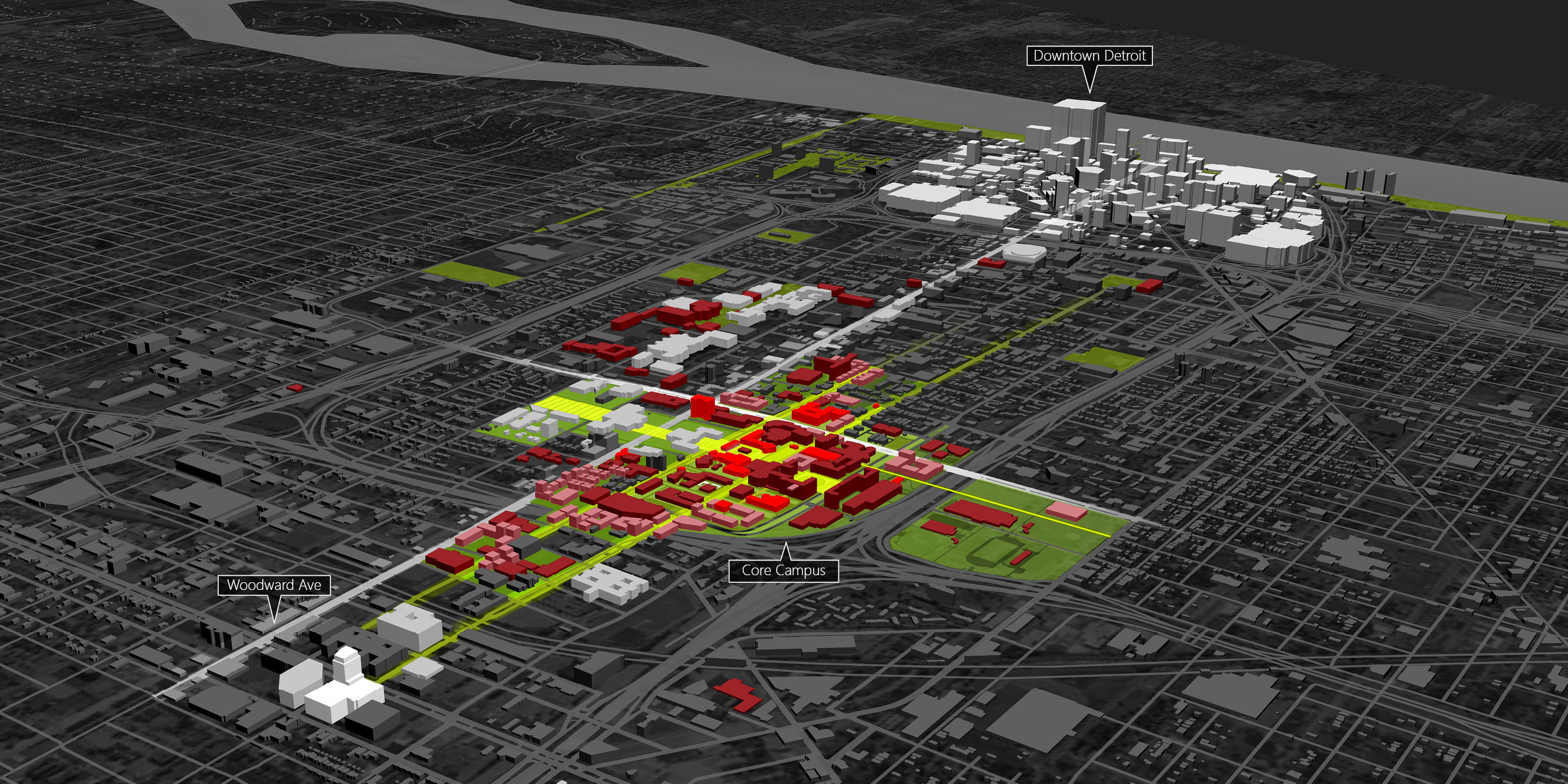
Wayne State University is a large, urban, public research university located in Detroit, Michigan. Founded in 1868, the university is committed to preparing its students to excel in a fast-paced and interconnected global society, and to creating relevant knowledge, particularly in areas like health disparities. We engaged in a yearlong collaboration to understand how the university could best manage its space portfolio and to create a new master plan.
The plan responds to the university’s specific challenges, including aging facilities and infrastructure, a shifting research culture that embraces problem-based investigation and interdisciplinarity, inefficient and opportunistic space arrangements, increased demand for housing on or near campus, a rapidly changing urban real estate environment, and pedestrian circulation, transportation, and parking requirements. Wayne is also a key driver of revitalization in Detroit’s Midtown district, and the university embraces this role, its broader civic responsibilities, and its connections with the city. Community engagement was therefore a crucial component of the planning process.
The resulting framework will guide decision making around the university’s physical environment. It includes:
- Important data sets and resulting analytics, and web-based mapping tools that promote data visualization and communication. The analysis shows significant softness in the university’s use of existing space, and concludes the university’s growing deferred maintenance liability represent a clear and present danger to its ability to deliver on its mission
- Physical strategies and principles that better organize the campus; prioritize and direct capital investment, particularly in the core campus; suggest near-term demolitions, renovations, and site improvements; make the campus more welcoming and inclusive for students, faculty, staff, and the community; and maximize future flexibility by providing options for long-term on-campus development, particularly for the future of the academic medical center;
- Organizational structures that promote integrated decision making within the university and better connect the university with its external community so as to allow for meaningful and sustained engagement.
Building on the framework established in Phase I, Phase II advances the work by translating strategic principles into spatial and design action. This next phase focuses on organizing the core campus to create a more welcoming and cohesive environment, concentrating academic activity within an enhanced central core that forms a vibrant heart for the university’s daily life. It also identifies key sites for future development to promote flexibility, particularly for the Health Sciences, and establishes a more deliberate, long-term real estate strategy aligned with institutional priorities.
The vision for this phase is organized around the concept of the “H,” a spatial framework that reinforces both the internal structure of the campus and its connections to the city. Gullen Mall and 2nd Avenue will become the university’s primary internal pedestrian main streets, encouraging movement and interaction within the academic core. Cass Avenue will evolve into a true civic corridor, linking campus and community life. The east–west cultural axis will be embraced and strengthened to connect major destinations and public spaces across the university. Meanwhile, Warren Avenue and Anthony Wayne Drive will be reconfigured to improve circulation, enhance safety, and support a more active, people-oriented environment. Improved connections to the athletics district will reinforce the relationship between academics, recreation, and community life, while the concept of decking over I-94 will be explored as a way to physically and symbolically bridge the core campus with iBio and TechTown. Enhancements to major gateways will further establish a stronger sense of arrival and identity for Wayne State University.
Today, the east–west connection is defined by a series of existing iconic landscapes that anchor the campus experience. Building on these strengths, the plan recommends focusing interventions where they can most effectively enhance continuity, visibility, and everyday use. Three key spaces are identified as priorities for transformation.
- Space A is envisioned as a multifunctional landscape designed for student use, with stormwater detention integrated below the surface.
- Space B, the Amphitheater at the Student Center, will become a lively social heart and an outdoor venue for events, performances, and informal gathering.
- Space C, the Cass Avenue Campus Gateway, will serve as a signature entrance that reflects the identity of the university.


